Fifty years ago, America’s fisheries were in peril. Overfishing had pushed fish populations to the brink, threatening coastal economies and the ocean’s vulnerable web of marine life.
Since then, the U.S. has made strides to transform our fisheries into a world class model that balances conservation with economic opportunity.
But today, we are approaching a newtipping point. We must build on our legacy and adapt to new challenges toensure our fisheries stay abundant for generations to come.
A Half Century of Success
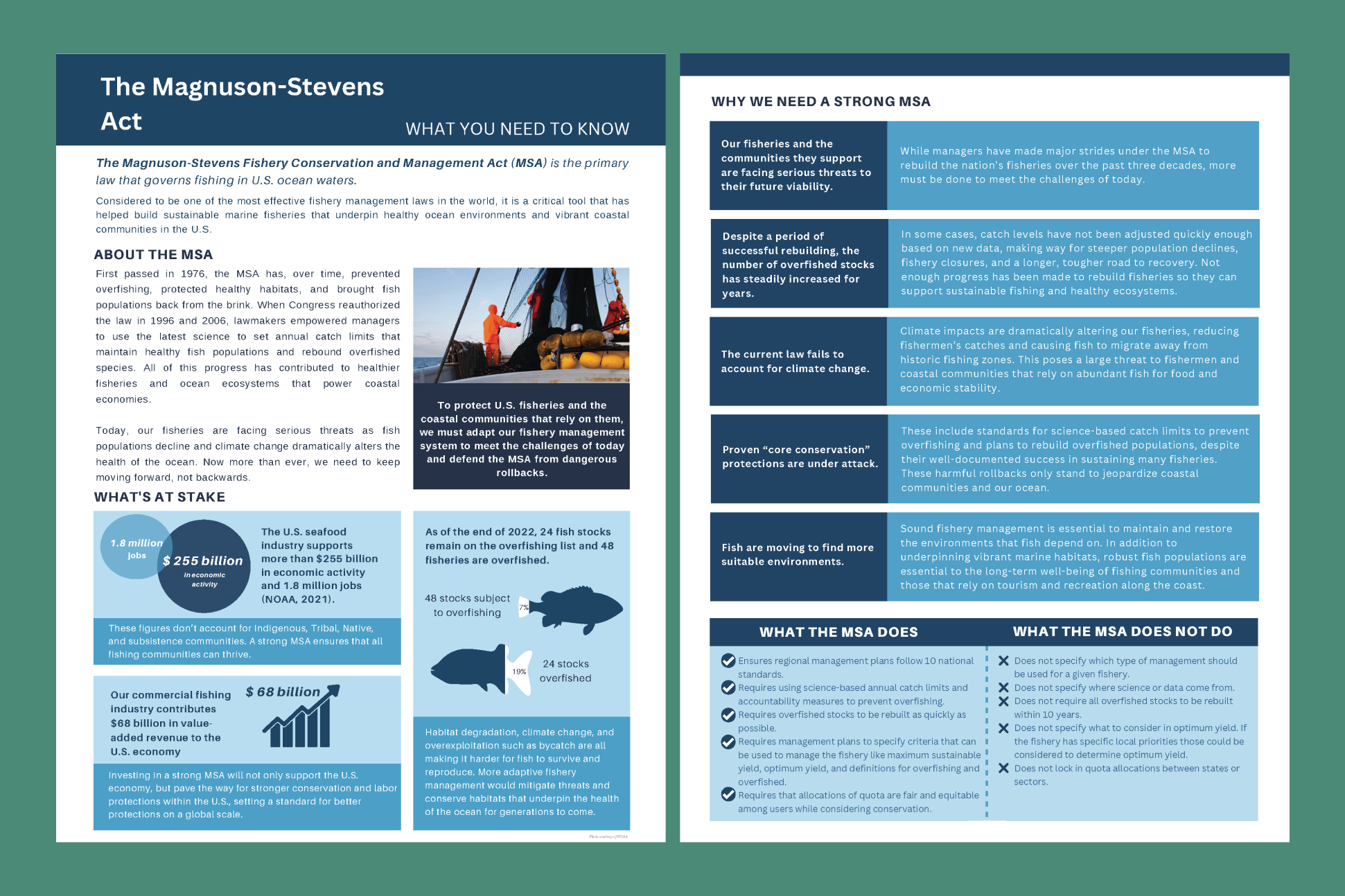
The Magnuson-Stevens Fishery Conservation and Management Act (a.k.a “the MSA”), is the primary law that governs fishing in U.S. ocean waters. Considered to be among the most effective fishery laws in the world, it established clear science-based standards to manage fishing and sustain healthy fish populations along U.S. waters.
1976
First passed in 1976 and improved over time, the MSA has prevented overfishing, protected healthy habitats, and rebounded declining fish populations. populations along U.S. waters.
1996
Congress reauthorized the law in 1996, strengthening requirements to prevent overfishing and rebuild overfished fisheries.
2006
in 2006 lawmakers improved the law and empowered managers to use the latest science to set annual catch limits that maintain fish abundance and recover overfished species.
Why We Need Well-Managed Fisheries:
Fish are the foundation of coastal economies and a healthy ocean – essential to feeding communities around the world and sustaining marine life. But healthy, abundant fisheries don’t happen by accident. They are sustainably managed and guided by science to balance the fish we catch with what the ocean needs to stay healthy and productive into the future.
This approach has transformed American fisheries over the last 50 years so that we can:
Power Coastal Economies
When we invest in sustainable management, we invest in American jobs, coastal prosperity, and the economic engines that keep waterfront communities thriving.
Sustain Ocean Health
Fish are connected to everything in the marine food web.Smart, sustainable management means minimizing bycatch, protecting habitat that fish depend on, and using the best available science to keep populations healthy and productive.
Protect Coastal Way of Life
Fisheries are woven into the fabric of coastal communities – sustaining traditions, cultures, and ways of life that span generations. When fish populations are healthy, local communities and families thrive.
Rising Threats Today
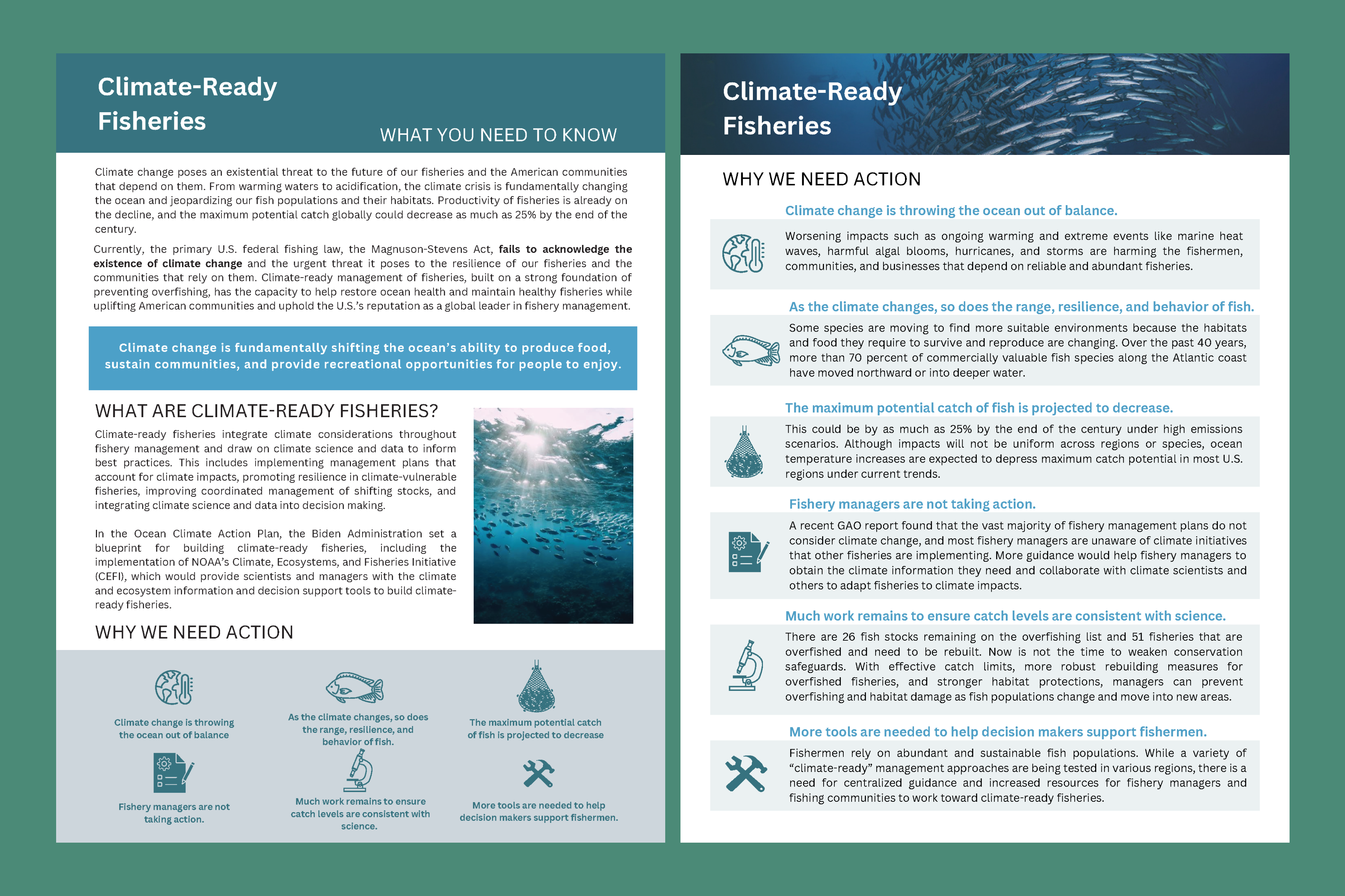
While the MSA has made remarkable progress, modern challenges are pushing fisheries to their limit.
Long-standing Management Issues
Our fisheries continue to face long-standing management issues, such as slow progress to rebuild overfished stocks. At least 42 fish populations are overfished, including a number of stocks that were previously rebuilt and are now sliding backwards again.
Environmental Changes
Rapidly changing ocean conditions are disrupting fisheries and affecting the range, resilience, and behavior of fish. Fishery disasters driven by changing conditions are increasing in frequency and severity, putting communities at risk.
REMOVAL OF SCIENTIFIC SAFEGUARDS
Recent actions to NOAA’s workforce, in addition to efforts to remove critical science-based protections, are also threatening the abundance and resilience of our fisheries.
The Next 50 Years
Now more than ever, we need to move forward, not backward: It’s time to strengthen responsible management of our fisheries and avoid harmful rollbacks that would jeopardize coastal communities and our ocean.